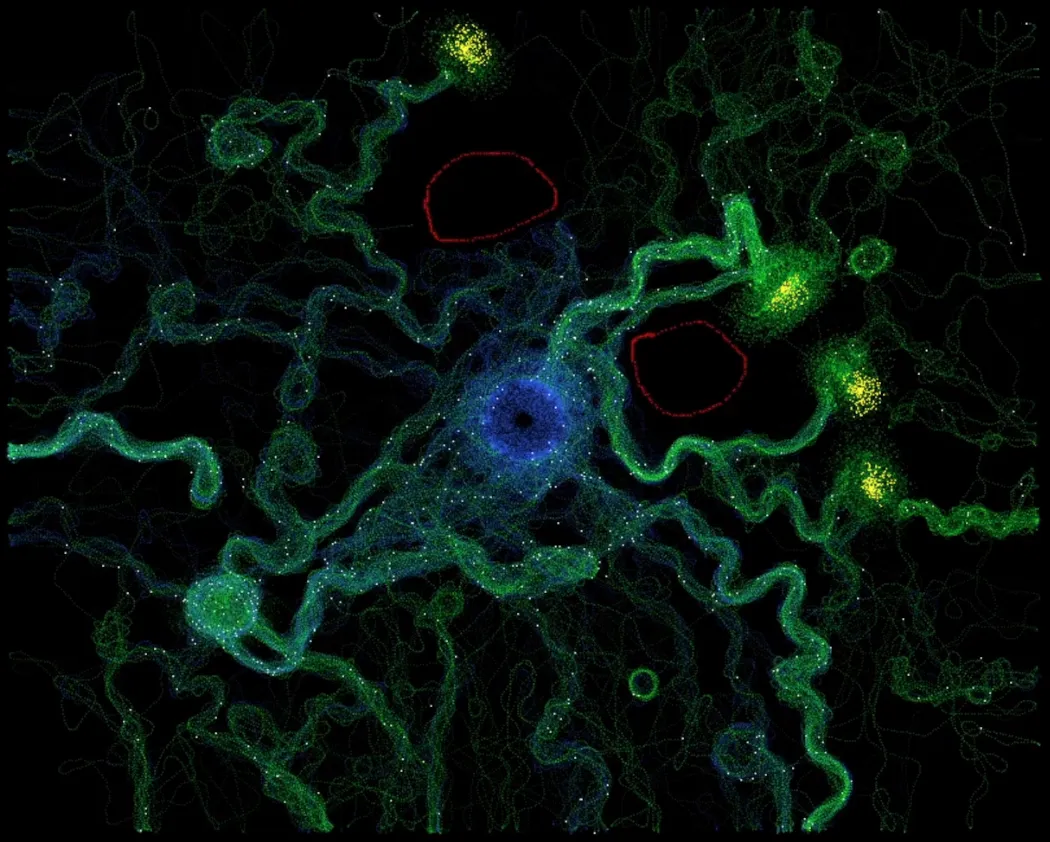
AntSim is an ant colony simulation in C++ with SFML and OpenMP. Thousands of ants leave the nest, lay pheromone trails while hunting for food, then follow those trails home. It was my first finished C++ project, and it was all about performance:
- O(1) marker removal with swap-and-pop
- Grid-based spatial partitioning to cut per-frame pheromone checks
- Profiling with Nsight Graphics, Massif and Perf
- Multithreaded ant behaviour with OpenMP
Navigation
Ants scan three zones ahead and steer toward the strongest pheromone. My first version had every ant check every marker every frame, which was painfully slow. The fix: check at intervals, randomly offset on construction so the work spreads across frames.
Ant::Ant(const sf::Vector2f position) {
    this->position = position;
    direction = Random::OnUnitCircle();
    velocity = Random::OnUnitCircle();
    state = FOOD;
    timer = Random::Float(0, MARKER_INTERVAL);
    frameTimer = Random::Float(0, UPDATE_INTERVAL);
}
Pheromone Grid
Next, I bucketed markers into a spatial grid. Each ant now checks only the 9 cells around it, using AABB-sphere tests to skip cells outside its range.
vector<shared_ptr<Marker>> foodMarkerGrid[128][72];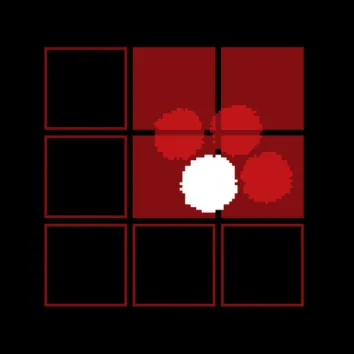
Big speedup, but the new bottleneck was loading and unloading markers:

Vectors
My favourite part, because it taught me the most about C++. Removing markers went through three stages:
vector.erase(): O(n). Everything after the removed element shifts back.std::list: no shifting, but still O(n) because you have to search for the element.- Vector + swap-and-pop: markers store their own index, so I can find them instantly, swap with the last element and pop. O(1).
foodMarkers[id].swap(foodMarkers.back());
foodMarkers[id]->id = id;
foodMarkers.pop_back();
Reflections
I loved working in C++ and wish I had more time with it. Revisiting this project has me fired up for the next one, which will, God willing, use C++ and Vulkan. It’s rough around the edges in places, but that’s inexperience, and the next project is the cure.